
How to Select the Right Filling Machine for Liquid, Paste & Powder Products
Introduction
Choosing a suitable filling machine is one of the most critical decisions for food, cosmetic, pharmaceutical, chemical and daily-care manufacturers. A well-matched filler can boost production speed, maintain consistent filling accuracy, reduce material waste and cut long-term operational costs. On the contrary, picking the wrong model leads to frequent downtime, uneven fill volumes, product contamination risks and wasted investment.
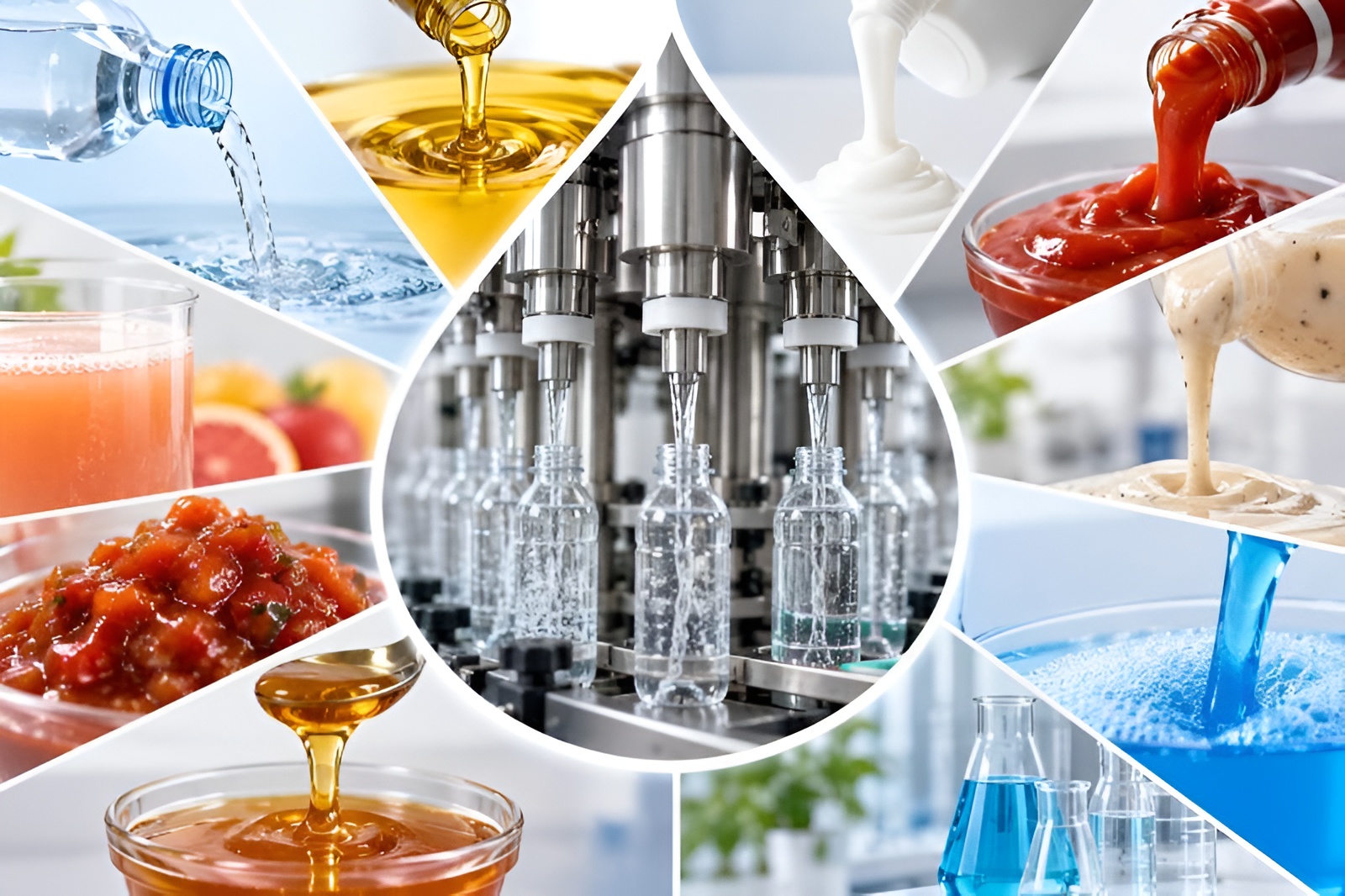
Liquid, paste and powder materials have vastly different physical properties. Thin water-like liquids flow freely; thick pastes are viscous and may contain suspended particles; powders are prone to dusting, bridging and inconsistent bulk density. These differences mean a filling machine that works perfectly for juice may fail for tomato sauce or milk powder.
This guide walks you through all core factors to evaluate before purchasing a filling machine, helping global buyers compare machine types, define production requirements and avoid common pitfalls when sourcing packaging equipment.
1. Analyze Your Product’s Physical Characteristics
The material property is the first factor to determine which filling technology fits your application.
Liquid Products
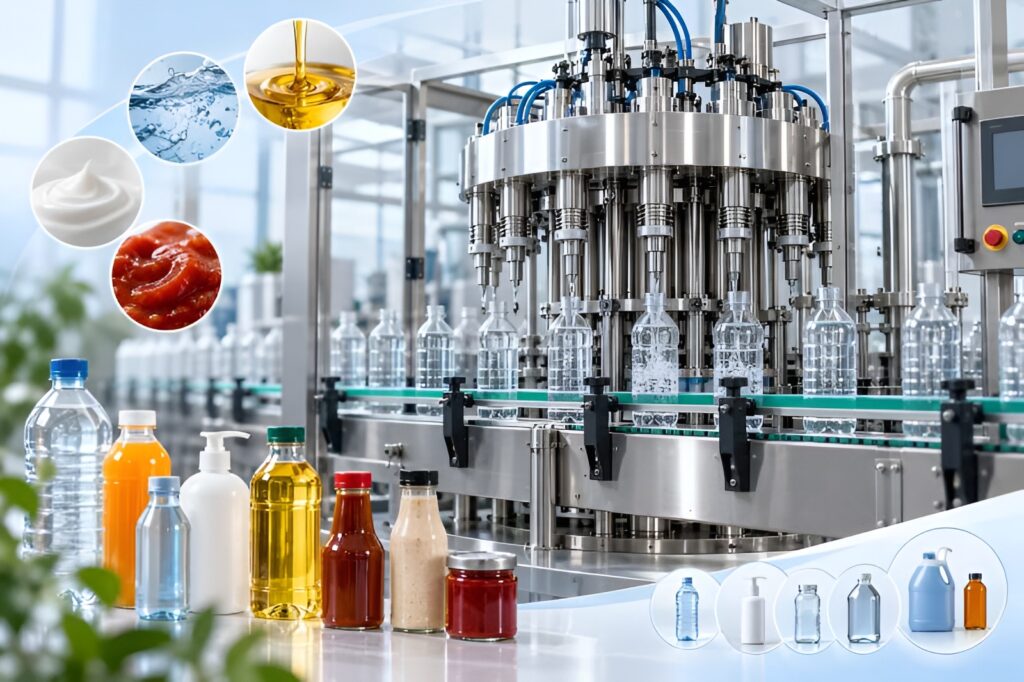
Low-viscosity liquids include water, alcohol, juice, essential oil, hand sanitizer and vinegar. They flow smoothly. Common filling technologies are gravity filling, peristaltic pump filling and overflow filling. Overflow fillers are ideal for bottles requiring consistent liquid level on display, such as cosmetic toner bottles.
High-viscosity liquids, like syrup, glycerin and honey, move slowly under gravity. They usually need piston filling or gear pump filling to push the material into containers steadily.
Paste Products
Pastes such as cream, ointment, ketchup, peanut butter and facial mask mud often have high viscosity. Some pastes contain solid particles like fruit pulp or scrub granules. Gravity filling cannot handle these materials. Pneumatic piston filling machines are the mainstream choice. Piston fillers deliver fixed volume reliably and can tolerate small solid particles without clogging.
Powder Products
Powders range from fine talcum powder, spice powder, protein powder to coarse flour. Fine powder creates dust during filling, while non-free-flow powder easily forms bridges inside hoppers and stops feeding. Auger screw filling machines are widely used for powder. For free-flowing granular powder, volumetric cup fillers are a cost-effective alternative. Dust containment is a must-have feature for fine powder to protect operators and avoid product loss.
2. Define Your Container Specifications
Container shape, material and size directly affect filling machine selection.
Bottles, jars, pouches, tubes and cans all require different feeding and positioning systems. Round bottles are easier to handle than irregular square or oval containers. Glass bottles need gentle handling to prevent breakage, while plastic bottles are lighter but may deform under pressure.
You also need to confirm filling volume range. Some machines support a wide volume adjustment range, while others work best within a narrow range for higher precision. If your production line runs multiple bottle sizes, check how fast the machine can complete changeover. Quick-change design saves lots of downtime between different SKUs.
3. Confirm Production Capacity & Automation Level
You need to clarify your required output, measured in containers per minute or per hour.
Semi-automatic filling machines are suitable for small-batch production, startup brands, or factories with frequent product formula changes. Operators manually place bottles and trigger filling. Their upfront cost is low, but labor cost is higher, and output is limited.
Fully automatic filling machines integrate bottle feeding, filling, capping and conveying. They run continuously for mass production. The initial investment is higher, yet they reduce labor input and stabilize output for medium and large factories.
Many buyers also consider modular design. You can start with a standalone filler and later add capping, labeling or checkweighing units to build a complete packaging line as your business grows. This flexible solution is popular for growing manufacturers.
4. Filling Accuracy Requirements
Different industries have different tolerance standards for filling volume.
Cosmetics and pharmaceutical products demand high filling accuracy. Overfilling increases raw material cost, while underfilling causes non-compliance issues and customer complaints. Piston and peristaltic pump fillers provide excellent volume accuracy.
For bulk food products such as cooking oil, the tolerance can be relatively wider, and gravity filling meets the requirement with lower investment.
Powder filling is harder to control than liquid because powder density shifts with humidity and vibration. Auger fillers with feedback weight checking can improve accuracy for high-standard powder applications.
5. Hygiene & Compliance Standards
Food, beverage, cosmetic and pharmaceutical industries have strict hygiene requirements.
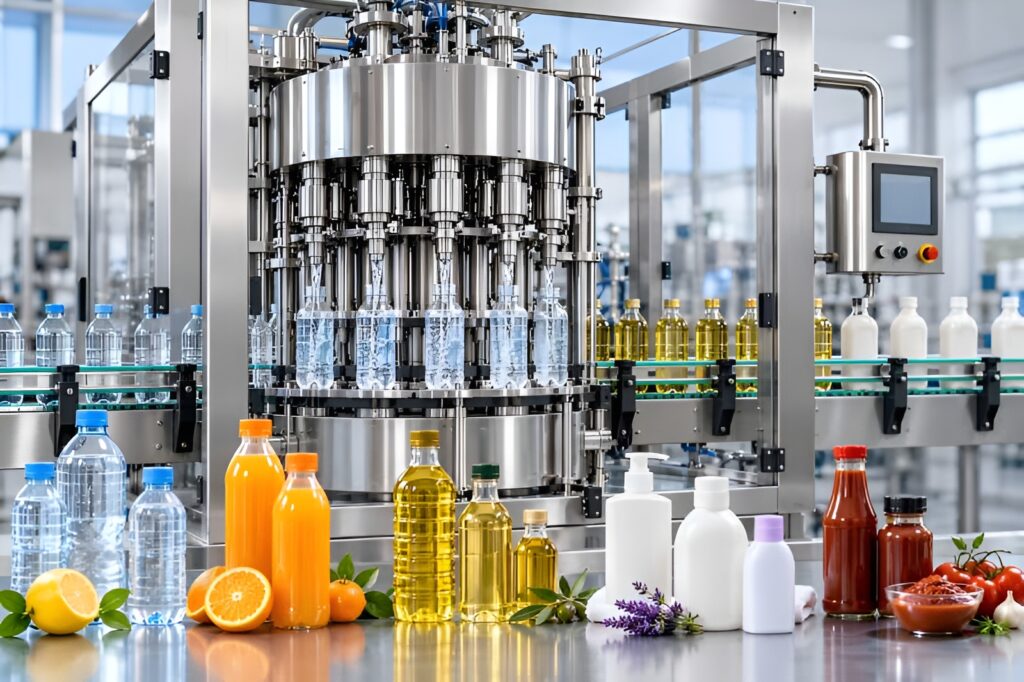
Machines touching products should adopt 304 or 316 stainless steel. 316 stainless steel resists corrosion from acidic or chemical materials, which is necessary for pharmaceuticals and acidic beverages. Smooth surface, no dead corners and easy disassembly are essential for cleaning and sterilization.
If you export products to EU, US or Middle East markets, verify the machine certificates. CE certification is required for EU import; FDA-compliant material is needed for food and cosmetic products sold in the US. Missing certificates will delay customs clearance.
6. Environment & Special Material Requirements
Some materials have special traits that cannot be ignored.
- Corrosive liquid: Need special anti-corrosion pump and material contact parts.
- Flammable liquid: The machine must support explosion-proof configuration.
- Foamy liquid: Require bottom-up filling to reduce foam generation.
- Heat-sensitive material: Avoid high shear pump types that may damage product properties.
- Dust-prone powder: Equip dust collection cover to keep workshop clean.
Workshop condition also matters. If your factory space is limited, compact tabletop machines are better. For wet cleaning workshops, select machines with waterproof electrical components.
7. Maintenance, Spare Parts & After-sales Support
A filling machine is a long-term asset. Reliable after-sales service is as important as machine quality.
Before ordering, ask suppliers about spare part availability and delivery lead time. Consumable parts include seals, hoses, pumps and sensors. If spare parts take months to ship, machine breakdown will stop your whole production line.
Check whether the supplier offers remote technical support, video training or on-site installation and commissioning. Many overseas packaging machine suppliers provide operation and maintenance tutorials in English for international clients.
You also need to evaluate the machine’s daily cleaning workload. Products that change formula frequently need machines that can be disassembled and cleaned quickly to avoid cross-contamination.
8. Budget & Total Cost of Ownership
Many buyers only compare the initial purchase price, ignoring hidden costs. The total cost includes shipping, customs duty, installation, training, spare parts and maintenance over years.
Semi-automatic machines have low upfront cost but higher long-term labor cost. Fully automatic models cost more at first but bring savings on labor and higher throughput for large orders.
Avoid selecting ultra-low-priced machines with poor component quality. Cheap fillers often suffer from unstable accuracy, frequent leakage and short service life, which create far bigger losses in production. Balance your budget with your long-term production goals.
9. Common Mistakes to Avoid When Buying Filling Machines
- Choosing a machine only based on product type without testing samples. Always send your actual material to the supplier for filling test before placing the order.
- Overlooking changeover time. If you run many SKUs, slow changeover greatly reduces production efficiency.
- Ignoring compatibility with upstream and downstream equipment. The filler must match the speed of your capper, labeler and conveyor.
- Neglecting hygiene requirements. Non-food-grade materials will block your product certification and export.
- Purchasing over-sized capacity. Buying a high-speed machine far beyond your current demand wastes capital and space.
Conclusion
Selecting the right filling machine starts with understanding your product properties, container type, output demand and compliance rules. Liquid, paste and powder each require distinct filling technologies.
Take time to compare semi-automatic and automatic options, verify accuracy standards, confirm material contact construction and evaluate after-sales support. Conduct sample tests whenever possible. A suitable filling machine is not just equipment; it is an investment that stabilizes your production, improves product quality and supports your business expansion in global markets.
Whether you operate a small cosmetic workshop or a large food manufacturing plant, clear requirements communication with your packaging machinery supplier helps you get a customized filling solution that matches your needs perfectly.

GoChicTech – Your Smart Pack Partner
If you have requirements for customized packaging solutions, please feel free to contact us, and we will get in touch with you within 24 hours.


